
Description
Choosing the right garbage bag is essential for maintaining cleanliness, hygiene, and efficient waste management in residential, commercial, industrial, healthcare, and institutional environments. A reliable Garbage Bag Manufacturer in India provides high-quality waste disposal bags designed for different types of waste, bin sizes, applications, and customer requirements.
Garbage bags are widely used for collecting and handling household waste, commercial waste, industrial waste, dry waste, wet waste, biomedical waste, and other disposable materials. With increasing awareness about hygiene and systematic waste segregation, the demand for durable and reliable garbage bags continues to grow across India.
A professional manufacturer focuses on material quality, thickness, size, sealing strength, leak resistance, packaging, and application-specific requirements to deliver dependable garbage disposal solutions.
What Are Garbage Bags?
Garbage bags are flexible bags used for collecting, storing, transporting, and disposing of waste. They are generally manufactured from suitable plastic materials and are available in different sizes, thicknesses, colours, and configurations.
Depending on the application, garbage bags can be supplied as standard bin liners, heavy-duty waste bags, coloured segregation bags, biomedical waste bags, biodegradable or compostable options, and customized garbage bags.
The selection of the right bag depends on factors such as:
- Type of waste
- Waste quantity
- Dustbin size
- Required load capacity
- Thickness
- Leakage resistance
- Handling conditions
- Disposal method
- End-user requirements
Garbage Bag Manufacturer in India
A reputed Garbage Bag Manufacturer in India manufactures waste bags according to application requirements and quality standards. Manufacturers may supply bags to households, offices, hotels, restaurants, hospitals, factories, schools, shopping centres, municipalities, housekeeping agencies, facility management companies, and waste management organizations.
Modern garbage bag manufacturing focuses on consistent dimensions, reliable sealing, suitable thickness, and good mechanical strength. Depending on the required application, manufacturers can produce different sizes and specifications for small, medium, and large waste containers.
For bulk buyers, customized production can also include specific dimensions, colours, packaging quantities, and printing requirements.
Types of Garbage Bags
Garbage bags are available in various types to meet different waste collection requirements.
1. Regular Garbage Bags
Regular garbage bags are suitable for everyday waste collection in homes, offices, shops, restaurants, and commercial establishments. They are available in multiple sizes and are designed for convenient placement inside dustbins.
2. Heavy Duty Garbage Bags
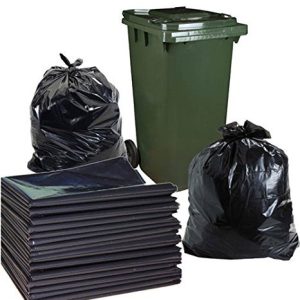
Heavy-duty garbage bags are manufactured for applications where greater strength and load-bearing capacity are required. They can be used for industrial waste, construction-related waste, landscaping waste, maintenance waste, and other heavier materials.
3. Dustbin Bags
Dustbin bags are designed to fit inside different types of waste bins. They help prevent direct contact between waste and the dustbin surface, making cleaning and waste removal easier.
They are commonly used in homes, offices, hotels, schools, hospitals, restaurants, and commercial buildings.
4. Biodegradable Garbage Bags
Biodegradable and environmentally focused waste bags are available for applications where customers are looking for alternatives with specific environmental characteristics. Buyers should verify the manufacturer’s claims, applicable certifications, and actual disposal conditions before selecting such products.
5. Compostable Garbage Bags
Compostable bags are designed according to applicable compostability requirements. In India, compostable plastic carry bags are subject to specified standards and certification requirements. The Plastic Waste Management Rules refer to IS/ISO 17088 for compostable plastics and require certification before such carry bags are marketed or sold.
6. Biomedical Waste Bags
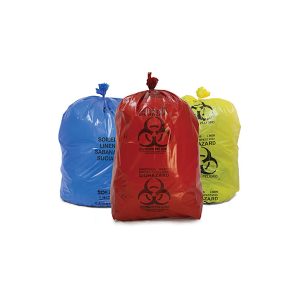
Biomedical waste collection requires appropriate bags designed for healthcare and waste-segregation applications. These bags can be supplied in different colours and specifications according to the waste-management system being followed by the healthcare facility.
Hospitals, clinics, laboratories, diagnostic centres, nursing homes, and healthcare institutions can require specialized waste collection bags.
7. Coloured Garbage Bags
Coloured bags are commonly used to support waste segregation systems. Different colours can be selected according to the waste-management requirements of a particular organization or facility.
Colour-coded bags can make waste identification and collection easier when used as part of an appropriate segregation process.
Materials Used for Garbage Bags
The selection of raw material directly affects the strength, flexibility, puncture resistance, and overall performance of garbage bags.
Depending on the product specification, manufacturers may use suitable polyethylene-based materials and approved recycled or virgin materials where permitted for the intended application.
Important material characteristics include:
- Flexibility
- Tensile strength
- Tear resistance
- Puncture resistance
- Thickness consistency
- Sealing strength
- Leak resistance
A professional Garbage Bag Manufacturer in India should select materials based on the intended application rather than using the same specification for every type of waste.
Features of High-Quality Garbage Bags
High-quality garbage bags should provide reliable performance during waste collection and handling.
Important features include:
Strong Sealing
A properly manufactured bottom seal helps reduce the possibility of leakage or bag failure during handling.
Good Load Capacity
The bag should be selected according to the weight and type of waste it needs to carry.
Leak Resistance
For wet and semi-wet waste, leak resistance is an important consideration. Suitable material, thickness, and sealing technology can help improve performance.
Tear Resistance
Garbage bags are frequently handled during collection and disposal. Adequate tear resistance helps reduce accidental splitting.
Consistent Thickness
Uniform thickness contributes to predictable mechanical performance and product quality.
Flexible Construction
Flexibility makes it easier to place the bag inside different dustbin shapes and remove filled bags.
Applications of Garbage Bags
Garbage bags have applications across almost every sector where waste is generated.
Residential Applications
Homes use garbage bags for collecting kitchen waste, household waste, packaging materials, and other disposable materials.
Commercial Applications
Offices, retail stores, malls, restaurants, hotels, and other commercial establishments require garbage bags for routine housekeeping and waste collection.
Industrial Applications
Factories and manufacturing facilities generate different types of waste. Heavy-duty garbage bags can be selected for suitable non-hazardous industrial waste applications.
Healthcare Applications
Hospitals, clinics, laboratories, and healthcare facilities require specialized waste collection solutions and appropriate segregation systems.
Hospitality Industry
Hotels, resorts, restaurants, cafés, and catering businesses use garbage bags for kitchen, housekeeping, maintenance, and general waste collection.
Educational Institutions
Schools, colleges, universities, and training centres use garbage bags for classrooms, cafeterias, washrooms, gardens, and common areas.
Facility Management
Housekeeping and facility management companies require garbage bags in bulk for regular cleaning and waste collection operations.
Importance of Garbage Bags in Waste Management
Garbage bags play an important role in maintaining cleanliness and improving the efficiency of waste collection. They help contain waste before it is transferred to the appropriate collection or disposal system.
Proper waste segregation is particularly important because separating waste at the source can improve collection, recycling, and processing efficiency. This is increasingly relevant in large urban areas where plastic and other solid waste can create significant waste-management challenges.
Garbage bags should therefore be selected and used as part of a broader waste-management system rather than being considered only as disposable packaging products.
Garbage Bags for Waste Segregation
Waste segregation involves separating different categories of waste at the point of generation. Garbage bags can support this process by providing clearly identifiable collection containers.
For example, organizations may use different coloured bags for different waste streams according to their internal waste-management procedures and applicable regulations.
Effective segregation can help:
- Improve waste collection
- Reduce cross-contamination
- Simplify handling
- Support recycling
- Improve workplace hygiene
- Reduce unnecessary waste mixing
Garbage Bag Manufacturing Process
The manufacturing process depends on the type and specification of the garbage bag.
A typical plastic garbage bag manufacturing process may involve the following stages:
Raw Material Selection
Suitable raw materials are selected according to the required strength, flexibility, thickness, and application.
Film Production
Plastic material is processed into a continuous film using appropriate film extrusion technology.
Film Cooling
The newly formed film is cooled and stabilized before further processing.
Printing
Where required, bags can be printed with product information, branding, handling instructions, or other permitted information.
Bag Cutting
The continuous film is cut into the required dimensions.
Sealing
The bottom or required sections of the bag are sealed to create the finished bag structure.
Quality Inspection
Finished bags can be inspected for dimensions, sealing quality, thickness, appearance, strength, and other defined quality parameters.
Packaging
The finished garbage bags are counted, packed, labelled, and prepared for dispatch.
Why Choose an Experienced Garbage Bag Manufacturer?
Selecting an experienced manufacturer can provide several advantages for distributors and bulk buyers.
Consistent Product Quality
A professional manufacturing setup can maintain consistent product specifications across bulk orders.
Customized Specifications
Customers may require different sizes, thicknesses, colours, packaging quantities, or other product specifications.
Bulk Supply
Manufacturers can support regular supply requirements for distributors, institutions, hospitals, businesses, and industrial customers.
Application-Based Products
Different waste types require different bag specifications. An experienced manufacturer can help buyers select a suitable product based on the intended application.
Cost-Effective Supply
Direct procurement from a manufacturer can help bulk buyers optimize their purchasing costs, particularly for regular requirements.
Garbage Bag Manufacturer for Bulk Orders
Bulk garbage bag buyers generally require dependable supply, consistent quality, competitive pricing, and timely delivery.
Typical bulk customers include:
- Garbage bag distributors
- Wholesale dealers
- Supermarkets
- Hospitals
- Hotels
- Restaurants
- Factories
- Facility management companies
- Housekeeping agencies
- Schools and colleges
- Government institutions
- Municipal organizations
- Waste management companies
Manufacturers can provide products in different pack sizes depending on the buyer’s requirements.
Customized Garbage Bags
Customized garbage bags can be developed for specific applications. Customization may include:
- Bag size
- Thickness
- Colour
- Packing quantity
- Bag configuration
- Printing
- Branding
- Application-specific requirements
For large-volume orders, buyers should provide clear technical specifications so the manufacturer can produce bags according to the required performance parameters.
Quality Control in Garbage Bag Manufacturing
Quality control is an important part of garbage bag production. A reliable manufacturer should monitor the product throughout the manufacturing process.
Quality checks may include:
- Raw material inspection
- Thickness measurement
- Width and length measurement
- Seal strength
- Tensile strength
- Tear resistance
- Puncture resistance
- Leakage testing
- Visual inspection
- Packaging inspection
Consistent quality control helps ensure that garbage bags perform reliably during collection, transportation, and disposal.
Environmental Considerations
Plastic waste management is an important environmental issue in India. Manufacturers and buyers should understand the applicable regulations before producing, purchasing, distributing, or using plastic bags.
India’s Plastic Waste Management Rules establish requirements relating to plastic carry bags, plastic sheets, recycling, labelling, and compostable plastic products. The rules have also been amended over time, so businesses should verify the latest applicable requirements before finalizing product specifications.
It is also important to distinguish between terms such as biodegradable, compostable, and recyclable, because these terms describe different characteristics and should not be treated as interchangeable.
For compostable plastic products, applicable certification and standards should be verified before marketing the products as compostable.
How to Select the Right Garbage Bag
Before purchasing garbage bags, consider the following factors:
1. Waste Type: Determine whether the bag will contain dry, wet, mixed, industrial, healthcare, or other waste.
2. Bag Size: Select a size that fits the dustbin properly without excessive material.
3. Thickness: Choose thickness according to the expected weight, sharpness, and handling conditions of the waste.
4. Strength: Heavy or sharp waste may require stronger bags with higher resistance to tearing and puncturing.
5. Leakage Protection: Wet waste applications require suitable leak-resistant construction.
6. Colour: Select colours according to the waste segregation system being followed.
7. Certification: For products making specific environmental or regulatory claims, verify the required certifications and documentation.
8. Supplier Reliability: Choose a manufacturer capable of providing consistent quality and regular supply.
Garbage Bag Manufacturer in India for Multiple Industries
India has a broad requirement for garbage and waste disposal bags because waste is generated across residential, commercial, institutional, industrial, and healthcare environments.
A dependable Garbage Bag Manufacturer in India can provide products for different applications while maintaining focus on quality, strength, dimensional accuracy, and customer requirements.
Manufacturers serving bulk buyers can also support distributors and organizations with regular production and supply schedules.
Frequently Asked Questions
Who is a Garbage Bag Manufacturer in India?
A Garbage Bag Manufacturer in India produces waste collection and disposal bags in different sizes, thicknesses, colours, and specifications for residential, commercial, industrial, institutional, and healthcare applications.
What types of garbage bags are available?
Common types include regular garbage bags, heavy-duty garbage bags, dustbin liners, coloured waste bags, biomedical waste bags, biodegradable bags, and compostable bags, depending on applicable requirements.
Can garbage bags be customized?
Yes. Depending on the manufacturer’s capabilities and order quantity, garbage bags can be customized by size, thickness, colour, packaging, and other specifications.
Are garbage bags suitable for wet waste?
Suitable garbage bags can be used for wet waste when they have appropriate material, thickness, sealing, and leak-resistance characteristics.
Are compostable and biodegradable garbage bags the same?
No. The terms describe different properties and should not automatically be considered equivalent. Buyers should verify the relevant technical specifications and certifications.
Where are garbage bags used?
Garbage bags are used in homes, offices, hotels, restaurants, hospitals, factories, schools, shopping centres, institutions, and waste-management facilities.
How can I choose a garbage bag manufacturer?
Consider product quality, manufacturing capabilities, customization options, quality-control practices, certifications where applicable, bulk supply capacity, pricing, and delivery reliability.
Conclusion
Garbage bags are an essential component of modern waste collection and hygiene management. From household dustbin liners to heavy-duty industrial waste bags and specialized healthcare waste collection bags, different applications require different product specifications.
A trusted Garbage Bag Manufacturer in India can provide reliable solutions based on bag size, thickness, strength, colour, material, application, and packaging requirements. For businesses purchasing garbage bags in bulk, selecting an experienced manufacturer can help ensure consistent quality and dependable supply.
As waste management and segregation continue to receive greater attention, choosing the right garbage bag and using it as part of an effective waste-management system can contribute to cleaner, safer, and more organized workplaces and public environments.
For bulk requirements, businesses should discuss their exact application, bag dimensions, material requirements, thickness, quantity, and applicable compliance requirements with the manufacturer before placing an order.